
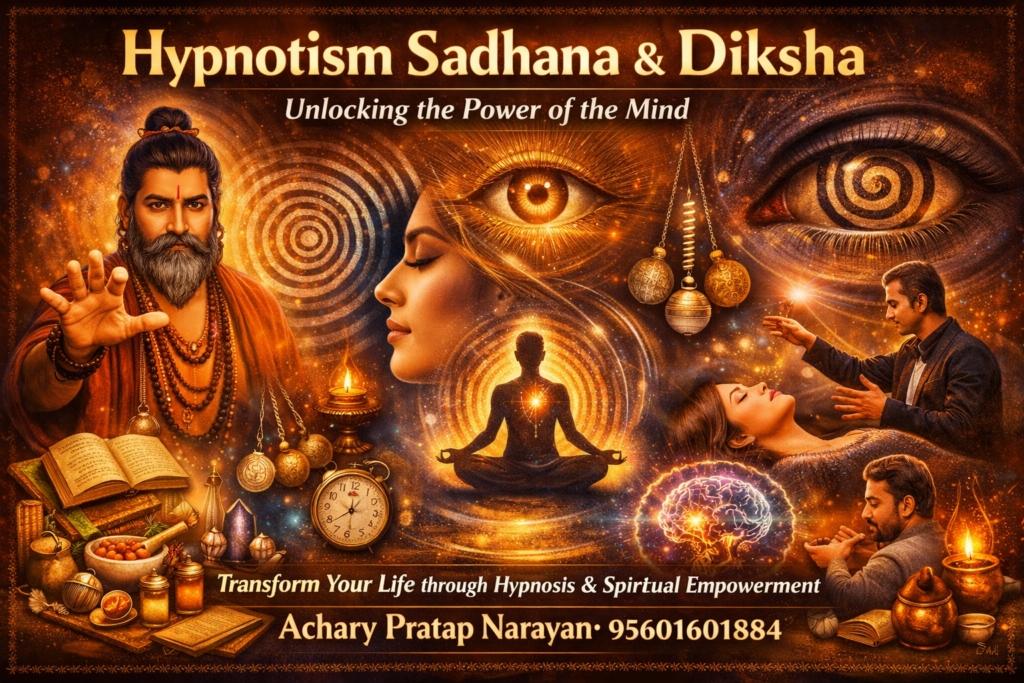
Hypnotism, often shrouded in mystery and misconception, is a fascinating field that delves into the complexities of the human mind. Rooted in historical practices and evolving through scientific inquiry, hypnosis therapy has gained recognition as a legitimate therapeutic tool for addressing various psychological and physical ailments. This article explores the intricate details of hypnotism, highlighting the contributions of significant figures like Narayan Dutt Shrimali, the role of sacred tools such as the Diksha Yantra, and the practice of Mala Sadhana. By examining the techniques, applications, and ethical considerations of hypnosis, we aim to provide a comprehensive understanding of this powerful practice and its potential benefits for individuals seeking healing and personal growth.

Don't forget to subscribe! Youtube Post Call Now +91 9560160184
Hypnotism Sadhana & Diksha

Busic Understanding Hypnotism: Concepts and Techniques
Definition of Hypnotism
Hypnotism is often viewed as a mystical art shrouded in intrigue and a sprinkle of skepticism. At its core, however, it’s a state of focused attention and heightened suggestibility. Not to confuse it with the ‘swinging pocket watch’ routine, hypnotism is about guiding an individual into a trance-like state where they become more receptive to suggestions. Think of it as a mental download where a person’s critical thinking takes a backseat, kind of like how we zone out while binge-watching our favorite series.
Thank you for reading this post, don't forget to subscribe! Youtube Post Call 919560160184

Common Techniques Used in Hypnosis
Hypnotists have a toolkit full of techniques to usher individuals into the trance zone. Some popular methods include:
- Induction Techniques: These might involve verbal cues, progressive relaxation, or visualization. It’s like gently lulling someone into a nap, but you’re awakening their subconscious instead.
- Suggestion Therapy: Once in a trance, the hypnotist offers suggestions aimed at changing behavior or perceptions—like convincing someone that they enjoy eating Brussels sprouts (good luck with that!).
- Regression Therapy: This technique digs into the archives of a person’s past to uncover memories or experiences that may be affecting their present-day life—think of it as a mental archaeological dig.
Types of Hypnotism: Stage vs. Clinical
When it comes to hypnotism, not all experiences are created equal. There are two major types:
- Stage Hypnotism: This is the entertaining version you see at fairs, where volunteers (somewhat predictably) cluck like chickens. It’s all about amusement and audience engagement.
- Clinical Hypnosis: This is the serious sibling, used in therapy to treat various psychological conditions like anxiety, depression, and even chronic pain. It’s like the trusty sidekick to medical treatments, helping the mind tackle issues that might otherwise be tricky to reach.
The Science Behind Hypnosis Therapy
How Hypnosis Affects the Brain
You might wonder what’s happening in that noggin of yours during hypnosis. Well, research shows that it alters brain activity, shifting patterns in regions related to consciousness and self-awareness. Functional MRI scans reveal changes in the anterior cingulate cortex and the thalamus-areas that manage attention and sensory experiences. It’s like your brain hitting the ‘focus’ button while the rest of the world fades into a distant background hum.
Physiological Changes During Hypnosis
But it’s not just brain fireworks. Hypnosis comes with physiological perks too! Heart rates might drop, breathing slows, and muscle tension often dissipates. It’s akin to getting a spa treatment without leaving your chair. These bodily responses can trigger a deep state of relaxation, which is pretty nifty for those looking to unwind or manage pain.
Evidence-Based Benefits of Hypnosis Therapy
What’s the verdict on hypnosis therapy? Numerous studies support its effectiveness, with benefits spanning from stress reduction to pain management and even helping with weight loss. Clinical guidelines have recognized hypnosis as a viable adjunct to treatment for various conditions, and patient testimonials often rave about breakthroughs in mental health and wellness. Who wouldn’t want a mental cheat code for life’s challenges?
Historical Perspectives on Hypnotism
Early Practices and Beliefs
Hypnotism isn’t just a recent fad. Its origins can be traced back to ancient civilizations, where forms of trance-like states were used in spiritual rituals and healing practices. Ancient Egyptians, Greeks, and even the mystical practices of shamans involved techniques that resemble hypnotic induction. Back then, it was all about connecting with the divine-or at least convincing folks you could.
Key Figures in the Development of Hypnosis
Fast forward a bit, and we stumble upon some intriguing characters who shaped modern hypnotism. Franz Anton Mesmer, with his “animal magnetism,” laid the groundwork for hypnosis. Then came James Braid, who coined the term “hypnotism” in the 19th century, moving it from the fringes of the fringe to the realm of psychology. These trailblazers paved the golden path that modern hypnotists now stroll down.
The Evolution of Hypnosis in Modern Medicine
As mesmerism waned, the medical community took an interest, leading to a renaissance of hypnosis in clinical settings. From the 1950s onward, hypnosis gained traction in psychology and medicine, shedding its theatrical image. Today, it’s recognized not just as a curiosity, but as a legitimate therapeutic tool, thanks in part to extensive research and growing acceptance by healthcare professionals. It’s like hypnosis went from a carnival act to a respected guest at the medical dinner table.
Narayan Dutt Shrimali: Life and Contributions to Hypnotism
Biographical Overview
Narayan Dutt Shrimali was a remarkable figure who blended traditional Indian wisdom with modern psychological insights. Born in 1911, he was a philosopher, author, and an ardent explorer of hypnosis. Shrimali’s life was dedicated to understanding and teaching the complexities of the mind, with a particular focus on how hypnotism and spiritual practices intertwine. He didn’t just dabble in the art; he dove deep, contributing significantly to its principles and practices.
Philosophical Insights and Teachings
Shrimali was not just about the ‘how’ of hypnotism, but also the ‘why.’ He emphasized the significance of self-awareness and the power of the human mind. His teachings incorporated elements of spirituality, fostering a holistic approach to hypnotism that went beyond mere tricks and techniques. He believed in the potential of each individual to harness their mind’s power-a bit like having a superpower waiting to be unleashed!
Impact on Hypnosis and Its Practices
The legacy of Narayan Dutt Shrimali is felt in the practices of modern hypnotism, especially within the context of Indian philosophy and spirituality. His blending of traditional methods with contemporary psychological practices introduced a unique perspective that broadened the scope of hypnosis. His contributions helped propel the understanding of hypnotism into new territories, making it not just a therapeutic tool, but also a means of personal transformation and spiritual growth.
The Role of Diksha Yantra in Hypnosis Practices
What is a Diksha Yantra?
A Diksha Yantra is a sacred geometrical diagram used in various spiritual practices, particularly in Hinduism and Tantra. Think of it as a mystical blueprint that channels energy and intention. Crafted typically from copper or other metals, these yantras are engraved with potent symbols that represent divine energies. In the realm of hypnotism, a Diksha Yantra serves as a tool for focusing the mind and elevating one’s consciousness, much like a magic wand, minus the capes and wands (although capes are always welcome).
Symbolism and Significance in Hypnosis
The symbols inscribed on a Diksha Yantra are not just pretty pictures; they embody specific energies and intentions that can enhance the hypnotic experience. Each yantra is believed to resonate with particular deities or energies, inviting them into the practice. In hypnosis, this symbolism can create a powerful mental anchor, helping individuals access deeper states of consciousness and relaxation. Picture yourself on an inner journey, guided not just by your voice but by the very essence of the universe-no pressure, right?
How to Use Diksha Yantra in Hypnotic Practices
Incorporating a Diksha Yantra into your hypnotic practices can be as simple or elaborate as you desire. Start by selecting a yantra that resonates with your intention. Sit comfortably with the yantra in front of you, allowing your gaze to soften as you breathe deeply. Visualize the symbols becoming a part of your mind’s landscape; this is your mental playground now. As you enter a hypnotic state, focus on the yantra, letting its energy guide you deeper into relaxation. Think of it as dialing in the perfect frequency on your mental radio-once you tune in, the vibes are magical.
Mala Sadhana: Methodologies and Benefits
Understanding Mala Sadhana
Mala Sadhana is a meditative practice that involves the use of a mala, or prayer beads, to assist in the repetition of mantras or affirmations. Imagine having a tiny cheerleader in your pocket (or around your wrist) that counts your intentions for you! Traditionally, a mala consists of 108 beads, a sacred number representing spiritual completion. By using a mala, practitioners can keep track of their recitations while also entering a meditative state, all while feeling as if they are part of an ancient cosmic club.
Steps Involved in Mala Sadhana Practice
- Preparation: Find a quiet space, grab your mala, and sit comfortably. A cup of tea or coffee is optional but highly encouraged.
- Set Your Intention: What do you want to focus on? Love, healing, success? Clear intention is your golden ticket.
- Begin Recitation: Start repeating your chosen mantra or affirmation. For each bead you pass through your fingers, say the mantra once.
- Stay Present: If your mind wanders (which it will, because it’s a mind), gently bring it back to the sound and feeling of the mantra.
- Conclude Your Practice: Once you complete the mala, take a moment to sit in silence, reflecting on your experience. It’s like the cherry on top of your spiritual sundae.
Benefits of Mala Sadhana in Hypnosis
Mala Sadhana harmonizes beautifully with hypnotic practices. Engaging in this meditation can promote relaxation, clarity, and a sense of focus-key ingredients for an effective hypnosis session. It can also enhance your ability to enter trance states, amplifying the effectiveness of suggestions made during hypnosis. Additionally, the act of repetition reinforces neural pathways in the brain, like strengthening the Wi-Fi signal of your subconscious mind. Who wouldn’t want stronger Wi-Fi?
Practical Applications of Hypnosis in Modern Therapy
Hypnosis for Anxiety and Stress Management
Hypnosis has emerged as a remarkable ally in tackling anxiety and stress. By guiding individuals into a deep state of relaxation, therapists can help clients access the root causes of their anxiety. It’s like diving into the deep end of the pool to retrieve that prized rubber duckie-only the duckie is your inner peace. Once comfortable, the therapist offers calming techniques and positive suggestions to replace anxiety with tranquility, paving the way for a more serene life.
Using Hypnosis for Pain Relief
Believe it or not, hypnosis can be a powerful tool for managing pain. Through focused attention and relaxation, individuals can alter their perception of pain, allowing them to cope better with chronic pain conditions or discomfort. It’s like having a remote control for pain-press the mute button, and voilà! Studies have shown that hypnosis can decrease pain perception, leading to improved quality of life. Bonus points if you impress your friends with your newfound superpower.
Hypnosis in Treating Phobias and Addictions
Hypnosis has a reputation for helping folks confront and overcome their fears, whether it’s fear of flying or that over-the-top fear of clowns (hey, it’s valid!). By revisiting the experiences that birthed these phobias, hypnosis provides a safe space to replace fear with empowerment. Similarly, in addiction treatment, hypnosis can create a compelling narrative of self-control and strength, helping individuals navigate cravings with finesse. It’s like giving your inner critic a vacation while sending your inner champion to the front lines.
Ethical Considerations in Hypnotism and Hypnosis Therapy
Informed Consent in Hypnosis
In the world of hypnotherapy, informed consent is king. It’s crucial for both clients and therapists to ensure that everyone knows what they’re signing up for. This means discussing goals, methods, and what hypnosis entails. Think of it as a friendly guidebook before an adventurous road trip; you don’t want to hit the road without knowing whether you’re heading to the beach or to a far-off land of dragons. It’s all about keeping it transparent and respectful.
Addressing Misconceptions and Myths
Hypnosis is often shrouded in myths that can make it feel more like magic than a legitimate therapeutic tool. People might think one can be made to cluck like a chicken or forget their own name-spoiler alert: that’s not how it works! Addressing these misconceptions is vital for easing fears and promoting the benefits of hypnosis. It’s about creating a clear picture of what to expect, without any smoke and mirrors. Just good old-fashioned mind magic, folks!
Maintaining Professional Boundaries and Integrity
In the realm of therapy, professional boundaries are essential. Hypnotherapists must maintain a clear and respectful relationship with clients to foster trust and safety. This includes keeping sessions confidential and avoiding dual relationships that could compromise that trust. Think of it as navigating a delicate dance, where both partners know the steps and maintain a respectful distance-no accidental toeIn conclusion, hypnotism offers a unique perspective on healing and self-discovery, combining ancient wisdom with modern therapeutic practices. The insights gained from figures like Narayan Dutt Shrimali and the use of tools such as the Diksha Yantra and Mala Sadhana illustrate the depth and versatility of hypnosis. As we continue to explore its applications and benefits, it is essential to approach this practice with respect and an understanding of its ethical implications. Ultimately, hypnotism stands as a valuable resource for those seeking to enhance their mental well-being and unlock the potential of their minds.
Frequently Asked Questions
What is the difference between hypnotism and hypnosis therapy?
Hypnotism is a broader concept that encompasses various techniques used to induce a trance-like state, while hypnosis therapy specifically refers to the therapeutic application of these techniques to address psychological and physical issues.
Is hypnotism safe and effective?
When conducted by a trained professional, hypnotism is generally considered safe. Numerous studies have shown its effectiveness in treating conditions like anxiety, chronic pain, and phobias, though individual results may vary.
Can anyone be hypnotized?
Most people can be hypnotized, but susceptibility varies. Factors such as personality, willingness to participate, and openness to the experience can influence a person’s ability to enter a hypnotic state.
What role does the Diksha Yantra play in hypnotism?
The Diksha Yantra is a sacred tool used in various spiritual practices, including hypnotism. It is believed to enhance focus, meditation, and the overall effectiveness of hypnotic techniques by creating a conducive environment for inner exploration.

