
Divine Quotations of SADGURUDEV NIKHILESHWARANAND

Don't forget to subscribe! Youtube Post Call Now +91 9560160184
December 2026
Thank you for reading this post, don't forget to subscribe! Youtube Post Call 919560160184
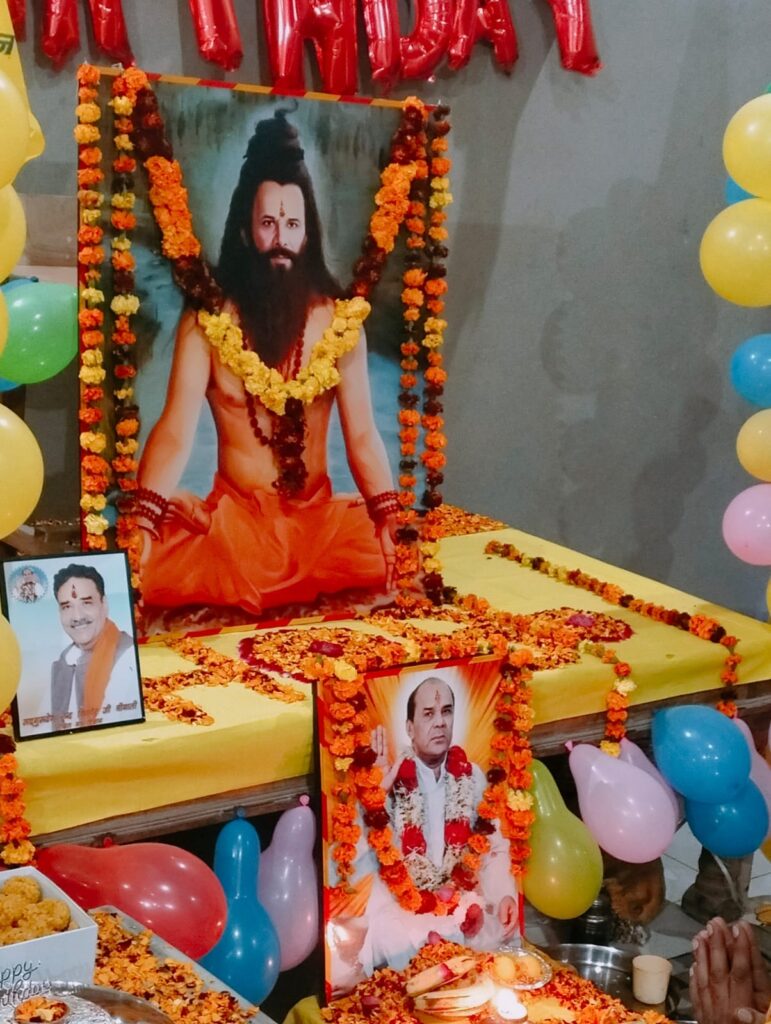
Your heart beats are now one with mine. From your lips pour out my own words. Your souls are now filled with my own consciousness. Your eyes now reflect my dreams and your body has started to fill up with my fragrance.
Siddhashram is a divine and sacred land and even the great Rishis and Yogis remain eager to gain entrance to this wonderful seat of Sadhanas. It is the highest seat of spiritual accomplishments where a Sadhak could attain to success in the most tough Sadhanas. One could enter it in the physical form or after leaving the mortal frame. Once one has been there one not just becomes divine rather one gains the capability of leading the future generations to the highest seat of spiritual attainment.
“All of you are going on the wrong path.” All of a sudden revered Sadgurudev’s voice sounded angry. “You think that the great soul before you is a common man. You are not able to realise the true worth of the Dikshas given by him. You are forsaking the treasures of a huge ocean and you are looking for pearls in ponds and ditches. Wake up while there still is time. These so-called Gurus who show miracles cannot give you anything. They would give only if they had something. They do not have anything. What can they give you?”
Every person in this world is running after something. Sometimes he joins some
Divine Quotations of SADGURUDEV NIKHILESHWARANAND
We Yogis and Sanyasis feel like laughing at your thinking. You are like the foolish beggar who finds a bagful of diamonds and thinking that they are glass pieces distributes them among the children. When we see the selfishness, cunningness and deceit in you we pity you. You are on the bank of a holy river the Dev Ganga and still you canno free yourself of your sins and weaknesses.
I do not need disciples who are cowards, who cannot stand up against the obstacles and opposition, who start to feel perturbed in difficult situations. I like disciples who can kick at the obstacles that lie on the way, who can overcome all problems, who remain ever eager to obey me and who are ready to give up all other links to be with me. Such individuals are part of my heart and soul. Their names are etched on my heart.
The Timeless Wisdom of Sadgurudev Nikhileshwaranand: Divine Quotations for the Soul
In the vast ocean of spiritual literature and guidance, few voices resonate with the profound clarity and piercing truth of Sadgurudev Nikhileshwaranand. As a spiritual giant who revived the ancient and often misunderstood sciences of Mantra, Tantra, and Yantra, his words serve not merely as instructions but as lamps lighting the treacherous path of Sadhana (spiritual practice). His teachings cut through the noise of modern confusion, offering direct access to the divine potential that resides within every human being.
This collection of divine quotations is curated to guide the seeker through the various landscapes of the spiritual journey. From the nature of the mind to the sanctity of the Guru-disciple relationship, these insights are more than words; they are energetic transmissions designed to awaken the dormant consciousness.
On the Essence of Spiritual Life
To walk the spiritual path is not to escape life, but to embrace it with higher awareness. Sadgurudev often emphasized that true spirituality is practical, dynamic, and transformative.
“Spirituality is not about running away to the Himalayas. It is about bringing the serenity of the Himalayas into your chaotic marketplace.”
Reflection: Many believe that to find God, one must abandon worldly duties. Sadgurudev corrects this misconception, teaching that the true test of a Yogi is to remain centered amidst the noise of daily life. The “marketplace” represents our jobs, families, and social obligations. If we can maintain our inner peace there, we have truly achieved something.
“Do not beg from God; demand your birthright. You are a spark of the Divine, not a beggar at the gates of a palace.”
Reflection: This quote challenges the traditional religious mindset of supplication. Sadgurudev empowers the disciple to recognize their own divinity. He teaches that we are children of the Cosmic Mother and Father; therefore, spiritual powers (Siddhis) and peace are our inheritance, not alms to be pleaded for.
“A life without Sadhana is like a flower without fragrance—beautiful to look at, but lacking its essential soul.”
Reflection: We spend much of our lives cultivating our outer appearance and material wealth. Here, Sadgurudev reminds us that without spiritual practice (Sadhana), our existence remains superficial. Sadhana adds the depth, the “fragrance,” that makes life truly meaningful and impactful.
“Fear is the greatest atheist. If you have fear, you do not have faith.”
Reflection: Fear paralyzes progress. It stems from a lack of trust in the divine support system. Sadgurudev equates fearlessness with true faith. If one truly believes that the Guru is guiding them, fear dissolves. This is a call to cultivate courage as a spiritual virtue.
On the Guru-Disciple Relationship
The bond between Guru and Shishya (disciple) is central to the Indian spiritual tradition. Sadgurudev Nikhileshwaranand described this not as a relationship of authority, but as a fusion of souls.
“The Guru is not a body; the Guru is an element, a Tattva. When you connect with the physical form, you limit him. When you connect with the Tattva, you become infinite.”
Reflection: Disciples often get attached to the physical presence of the Master. Sadgurudev urges us to look beyond the mortal frame. The Guru Tattva is an eternal principle of guidance that exists everywhere. Connecting to this energy allows the disciple to receive guidance even when physically distant from the Master.
“I do not want your wealth or your praise. I want your surrender. Only in your emptiness can I pour my fullness.”
Reflection: The ego is full of its own ideas, prejudices, and desires. A cup that is already full cannot hold more tea. Similarly, a disciple full of ego cannot receive the Guru’s grace. “Surrender” here means setting aside one’s limited intellect to allow the higher wisdom of the Guru to operate.
“Shishya (Disciple) means one who has dissolved. Until you dissolve your ‘I-ness’, you cannot become a Shishya.”
Reflection: Becoming a disciple is an active process of deconstructing the ego. It isn’t just about signing up for a course or taking initiation (Diksha). It is a continuous process of melting one’s identity into the will of the Guru, much like a river merges into the ocean and loses its separate name and form.
“My relationship with you is not for this life alone. I have held your hand through lifetimes, and I will not let go until you reach the final destination.”
Reflection: This is a profound assurance of safety and continuity. The spiritual journey often spans many incarnations. Sadgurudev comforts the seeker by revealing that the Guru’s commitment is eternal. Even if the disciple falters or forgets, the Guru remembers and continues to guide.
On the Power of Mantras
Sadgurudev was a master of Mantra Vigyan (the science of sound). He demystified mantras, explaining them as precise formulas for altering consciousness and manipulating energy.
“A Mantra is not a prayer; it is a switch. When you press the switch, the light must come on. If it doesn’t, the fault lies in the wiring (your concentration), not the switch.”
Reflection: This quote emphasizes the scientific nature of mantras. They are not dependent on the whims of a deity but on the accuracy of the practitioner. It places the responsibility squarely on the Sadhak (practitioner) to perfect their focus and pronunciation to trigger the desired result.
“Silence is the womb from which the most powerful Mantras are born. Learn to keep your mouth shut and your mind open.”
Reflection: Constant chatter dissipates energy (Shakti). To make a mantra effective, one must cultivate inner silence. This silence conserves the energy needed to “fire” the mantra into the cosmos. It suggests that introspection and solitude are prerequisites for successful chanting.
“Do not count the beads; count the moments you were truly connected. A mechanical rotation of the Mala brings mechanical results.”
Reflection: It is easy to get caught up in the number of repetitions (japa counts). Sadgurudev reminds us that quality supersedes quantity. One round of mala performed with intense devotion and focus is worth more than a thousand rounds performed while the mind wanders.
On Overcoming Obstacles and Karma
The path is never without hurdles. Sadgurudev provided practical wisdom on how to face the inevitable challenges of life and the weight of past karma.
“Obstacles are not there to stop you; they are there to test your resolve. A river does not stop when it meets a rock; it flows around it.”
Reflection: This metaphor of the river teaches resilience. Obstacles are seen as natural parts of the landscape, not signs of failure. The spiritual seeker must be fluid and adaptable, finding new ways to progress rather than giving up at the first sign of difficulty.
“You cannot wash away Karma with water; you can only burn it with the fire of Sadhana.”
Reflection: Many seek easy remedies for their suffering, such as bathing in holy rivers. While these have their place, Sadgurudev insists that deep-rooted karmic patterns can only be destroyed through the intense heat (Tapasya) generated by spiritual practice. Sadhana acts as a purifier that incinerates the seeds of future suffering.
“Do not blame the planets for your misery. You created your destiny, and you have the power to rewrite it.”
Reflection: Astrology is often used as a crutch or an excuse for inaction. Sadgurudev, a master astrologer himself, taught that while planets influence us, the human will is stronger. Through high-level Sadhana, one can override planetary influences and reshape their destiny. This is a message of ultimate self-empowerment.
“Pain is the chisel the Divine uses to sculpt you into a masterpiece. Do not cry when the chisel strikes; rejoice that you are being shaped.”
Reflection: Suffering is often viewed negatively. Here, it is reframed as a necessary tool for growth. Just as a sculptor chips away unwanted stone to reveal the statue within, life’s hardships chip away our ego and impurities to reveal our true, divine nature.
On Sadhana (Spiritual Practice)
What does it mean to practice? Sadgurudev’s definition of Sadhana was rigorous yet accessible, emphasizing consistency and intent.
“Sadhana is a battle against your own lower nature. The enemy is not outside; it is sitting within you in the form of laziness and doubt.”
Reflection: The true jihad or holy war is internal. We often project our problems onto others, but the real barriers are our own inertia (Tamas) and skepticism. Recognizing these internal enemies is the first step to conquering them.
“Do not wait for the ‘right time.’ Every moment is auspicious if your intention is pure. Start where you are.”
Reflection: Procrastination is a trap. People often wait for a specific planetary alignment or life situation to begin their spiritual work. Sadgurudev cuts through this delay, teaching that the power of Sankalpa (intent) makes any moment the right moment.
“Consistency beats intensity. It is better to meditate for 10 minutes every day than for 10 hours once a year.”
Reflection: Spiritual energy needs to be built up layer by layer. Sporadic bursts of effort do not create lasting change. Like dripping water that eventually wears away a stone, consistent, daily practice yields the greatest transformation.
On the Goal of Human Life
Ultimately, why are we here? Sadgurudev constantly pointed his disciples toward the ultimate objective of self-realization and total liberation.
“You are not a drop in the ocean. You are the entire ocean in a drop. Realize your vastness.”
Reflection: This echoes the ancient Upanishadic wisdom. We limit ourselves by identifying with our small bodies and small names. Sadgurudev invites us to shift our perspective and realize that the macrocosm is reflected in the microcosm. We contain the universe within us.
“Death is not the end; it is merely a change of clothes. Why fear changing a torn shirt for a new one?”
Reflection: Fear of death is the primal fear. By comparing the body to old clothes, Sadgurudev trivializes death, stripping it of its terror. This perspective helps the seeker live with more freedom and less anxiety about mortality.
“The ultimate Siddhi (power) is not flying in the air or walking on water. The ultimate Siddhi is to remain joyful in every situation.”
Reflection: In the pursuit of mystical powers, seekers often lose sight of the real goal: inner state of being. Sadgurudev redefines success not as a miraculous display, but as the maintenance of equanimity and joy (Ananda) regardless of external circumstances. This is the hallmark of a true master.
On Inner Peace and the Mind
The mind is often described as a drunken monkey. Taming it is the primary task of the Yogi.
“The mind is a good servant but a terrible master. If you do not control it, it will destroy you. If you control it, it will serve you like a genie.”
Reflection: We are often slaves to our impulses and thoughts. Sadgurudev emphasizes that the mind is a tool. When disciplined through meditation and mantra, the mind becomes a powerful instrument capable of manifesting reality. When left unchecked, it leads to chaos.
“Peace is not found in the absence of noise, but in the absence of desire.”
Reflection: We often think peace will come when the kids move out, when we retire, or when the house is quiet. Sadgurudev points out that external silence is irrelevant if the internal noise of wanting and craving continues. True Shanti (peace) arises when the thirst for material gratification subsides.
“Stop analyzing everything. The intellect cuts and divides; the heart joins and heals. Sometimes, you must lose your mind to come to your senses.”
Reflection: The modern world overvalues intellectual analysis. While useful, the intellect cannot grasp the totality of the divine. Sadgurudev encourages us to sometimes bypass the logic center and operate from the heart center (Anahata Chakra), where intuition and direct perception reside.
On Service (Seva)
Spiritual growth is not a selfish pursuit. It must eventually flow outward in service to humanity.
“If your Sadhana does not make you kinder, it is useless. The first sign of spiritual progress is compassion.”
Reflection: Spiritual ego is a dangerous trap where a practitioner feels superior to others. Sadgurudev uses kindness as the barometer for progress. If you are chanting thousands of mantras but remain rude or indifferent to the suffering of others, the practice has failed.
“Serve the Guru by serving his creation. When you wipe the tear of a stranger, you are worshipping me.”
Reflection: This expands the definition of Guru Bhakti (devotion). It is not just about garlanding a photo; it is about seeing the Guru in everyone. Service to humanity is elevated to the status of divine worship.
Conclusion: The Living Flame of Wisdom
The words of Sadgurudev Nikhileshwaranand are not dusty artifacts of the past; they are living embers waiting to ignite the fire of transformation in the heart of the seeker. In a world that is increasingly complex and disconnected, his simple, powerful aphorisms offer a roadmap back to the self.
To read these quotes is one thing; to live them is another. As Sadgurudev himself said, “Knowledge remains a burden until it becomes experience.”
May these divine quotations inspire you to deepen your practice, strengthen your resolve, and walk the path of the Siddhas with courage and joy. The Guru is always waiting—not on a distant mountain peak, but in the silent chamber of your own heart.
Meta Title: Divine Quotations of Sadgurudev Nikhileshwaranand: Wisdom for the Soul

